Most SEO arguments start with a spreadsheet. Someone spots a keyword doing 40,000 searches a month, drops it into the content plan, and calls it a strategy. Six months later, the page sits on page four.
No traffic. No leads. Just a lot of wasted effort.
I have watched this play out across plenty of content programs. The volume looked fantastic on paper. The result never showed up.
So which one deserves your focus, the size of the search or your site’s authority on the subject? Here is how I think about it after years of running content for B2B brands.
Let me clear something up. Keyword volume and topical authority are not rivals. They answer two very different questions.
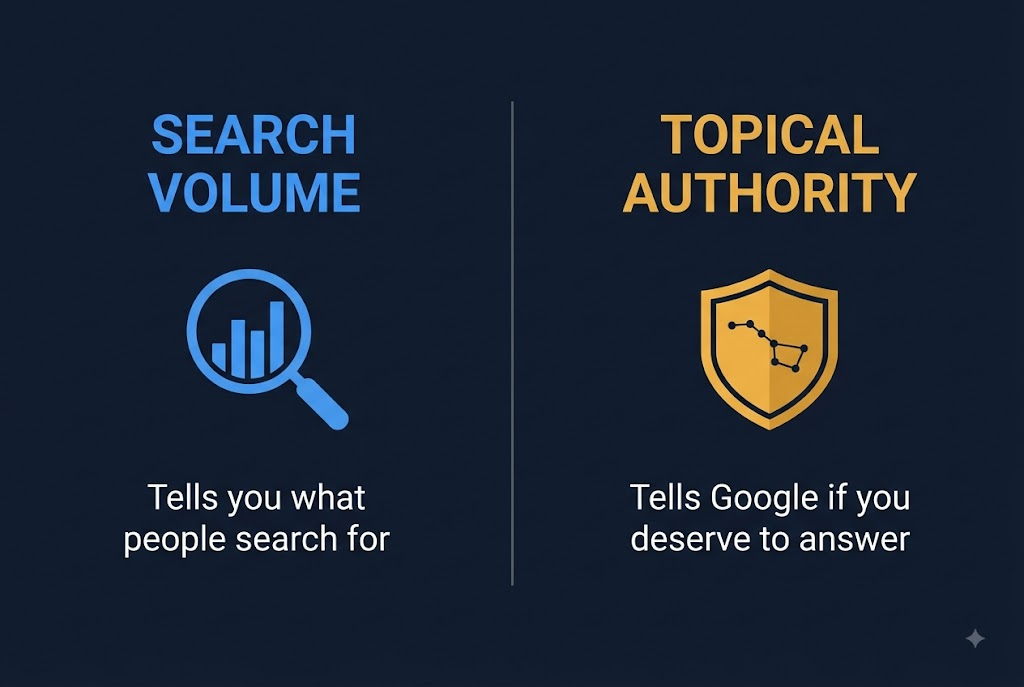
One is about demand. The other is about your ability to capture it. Choosing between them is like choosing between knowing where your customers are and being able to sell to them. You want both, in the right order.
Volume feels safe because it is a number, and numbers feel like proof. The trouble is that this particular number lies more than people care to admit.
Here is the biggest reality check in SEO. Ahrefs studied around 14 billion pages and found that 96.55% of them pull zero traffic from Google. Plenty of those pages targeted real keywords with real search volume.
The volume was never the missing ingredient.
There is also the click problem. A big search number does not mean big clicks. SparkToro data compiled by Ahrefs shows 61.5% of desktop searches and 34.4% of mobile searches end without a single click.
Now stir AI Overviews into that. The top result loses even more clicks to answers shown right on the page. Chasing raw volume in that setup is like renting a billboard on a road nobody drives down anymore.
Volume is an input. It was never meant to be the finish line.
Topical authority is Google’s way of asking a blunt question. Does this site actually understand the subject, or did it publish one post and hope for the best?
When you cover a topic properly, from the beginner questions to the awkward edge cases, you look like a genuine source. Not a one hit wonder.
The numbers back this up. Graphite ran a study across multiple sites and found that pages with strong topical authority reach visibility far faster than pages without it. Same effort, quicker payoff, because the trust was already there.
Google’s 2024 API leak added weight to it. The documents exposed a signal called siteFocusScore, which measures how tightly a site sticks to one subject. Focus is being measured, not just raw output.
You have probably seen this in the wild. A small site with barely any backlinks outranks a giant retailer for a niche query, purely because it covers that little corner of the internet in real depth.
I am not going to pretend topical authority is a magic switch. Plenty of sharp people in the SEO world think the phrase is overcooked, and they have a point.
In a well-known r/SEO thread, one marketer argued the whole idea is just relevancy wearing a new outfit. Google’s John Mueller stepped in, agreed, and basically told people not to lose sleep over it.
That criticism is fair. Stacking related articles will not rescue thin, boring content. If your posts are shallow, linking them together just hands Google a tidy pile of mediocre pages.
A practitioner in a developer forum put the balance nicely. Keywords are not dying, he said, they are shifting from density toward themes and intent.
So topical authority is not a hack. It is what happens naturally when you cover something better than the next site.
One more thing worth saying. Search is not just ten blue links anymore. AI Overviews and chat assistants now answer plenty of questions before anyone clicks a result.
That shift rewards depth, not keyword counting. These systems pull from sources they treat as trustworthy on a subject. Sound familiar? That is topical authority again, just wearing a newer badge.
The sites building real depth today are not only protecting their Google rankings. They are lining themselves up to get cited when the answer comes from an AI instead of a results page.
Here is the framework I use with clients. It leans on where you are starting from, not on a single tidy answer.
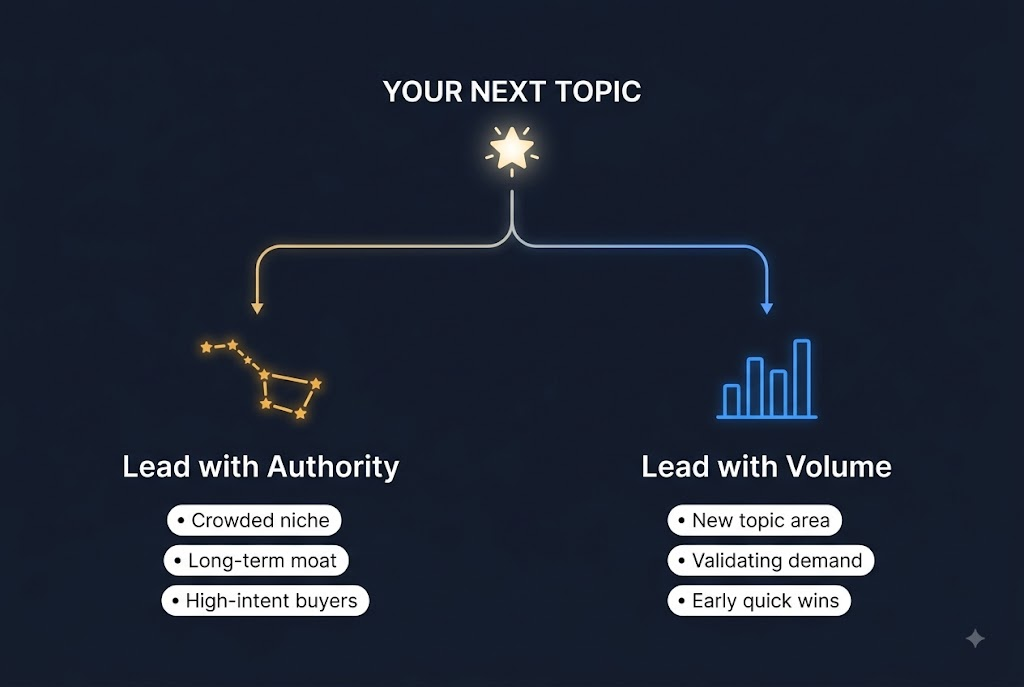
Put topical authority first when:
Lean on volume signals when:
Notice I said volume signals, not volume alone. You still look at the numbers. You just stop letting them run the whole show.
If you want something to try this week, here is the short version.
That last point carries more weight than most people expect. Once you build authority, single keyword rankings stop being the headline. You start showing up for dozens of related searches you never directly targeted.
If I had to give you one rule, it is this. Treat topical authority as your strategy and keyword volume as one of your inputs.
Volume tells you where the demand lives. Authority is what lets you own it. Flip that order and you will keep collecting keywords that look great in a spreadsheet and vanish on the SERP.
Pick a topic worth owning. Cover it better than anyone else in your space. The rankings usually follow the people who earned them.